
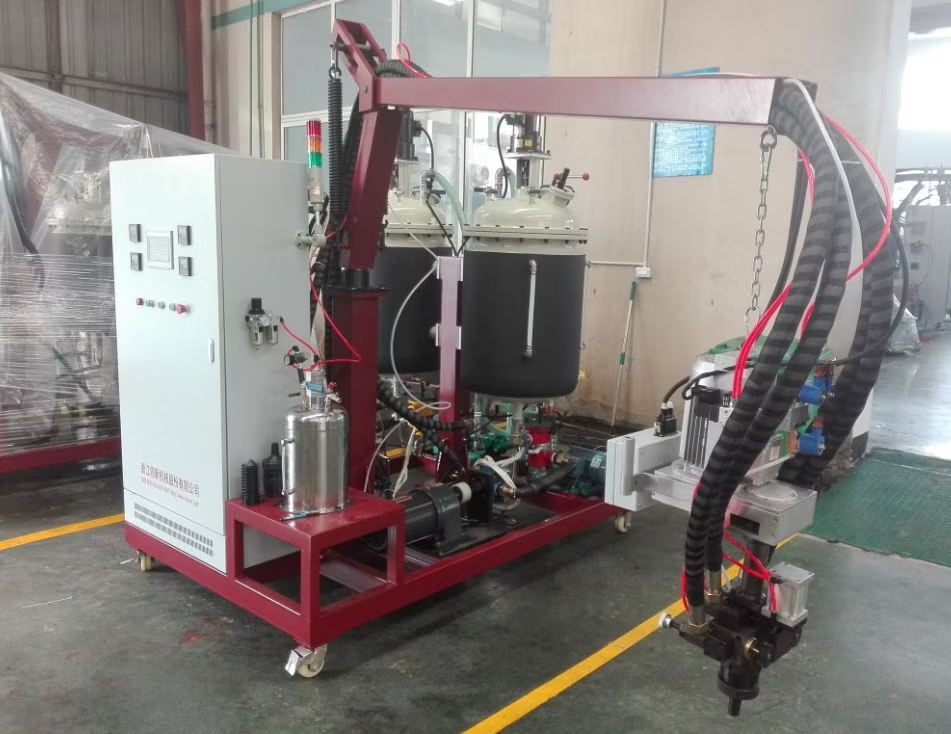
In modern industrial production, precision and speed are essential factors that determine overall success, and the use of Urethane Dispensing Equipment has become a key solution for improving both accuracy and manufacturing efficiency across multiple industries. From automotive assembly lines to electronics encapsulation and construction materials, manufacturers depend on advanced dispensing systems to ensure consistent quality, reduced waste, and optimized production workflows.
What is Urethane Dispensing Equipment?
What exactly does urethane dispensing equipment do in industrial environments? It is a specialized system designed to measure, mix, and dispense polyurethane materials in precise ratios. These systems are engineered to handle reactive chemical components that must be combined accurately before application.
Polyurethane materials are widely used due to their flexibility, durability, and resistance properties. However, they require precise handling because even small deviations in mixing ratios can lead to defects in the final product. Dispensing equipment ensures accuracy by automating the entire process, reducing human error, and maintaining consistent output quality.
How Does Urethane Dispensing Improve Accuracy?
How does urethane dispensing technology enhance accuracy in manufacturing processes? The system uses controlled pumping mechanisms and automated ratio management to ensure that each component is delivered in exact proportions.
Sensors continuously monitor flow rates, pressure levels, and material viscosity. This real-time data allows the system to make automatic adjustments whenever necessary. As a result, every batch of material is mixed under identical conditions, eliminating inconsistencies that can occur in manual operations.
Accurate dispensing also ensures that chemical reactions occur properly, producing strong, durable, and reliable end products.
Why Manufacturing Efficiency Depends on Dispensing Systems?
Why is manufacturing efficiency closely linked to urethane dispensing systems? Efficiency in production depends on speed, consistency, and minimal material waste. Traditional manual methods often involve delays, errors, and inconsistent application, which reduce productivity.
Automated dispensing systems streamline the entire workflow. Once parameters are set, the machine operates continuously with minimal intervention. This reduces downtime and allows for high-volume production without sacrificing quality.
By improving cycle times and reducing rework caused by defects, manufacturers achieve higher output levels and better resource utilization.
Key Components That Enhance Performance?
What are the essential components that make urethane dispensing systems highly efficient? These systems are composed of several integrated parts that work together to ensure precision and reliability.
Material storage tanks maintain stable conditions for raw polyurethane components. High-precision pumps control the flow of each material. Mixing units combine components under controlled pressure and timing.
Control systems allow operators to set exact ratios, temperatures, and dispensing speeds. Advanced sensors provide continuous feedback to ensure optimal performance. Dispensing heads ensure accurate application onto molds, surfaces, or production lines.
Each component plays a crucial role in maintaining system efficiency and consistency.
Where is Urethane Dispensing Equipment Used?
Where is this technology commonly applied in modern industries? Urethane dispensing systems are widely used across multiple sectors due to the versatility of polyurethane materials.
In automotive manufacturing, they are used for sealing, gasketing, vibration damping, and structural reinforcement. In construction, they support insulation systems, adhesives, and waterproof coatings.
The electronics industry relies on these systems for potting and encapsulation, protecting delicate components from environmental damage. Furniture manufacturing uses polyurethane foam systems to produce comfortable and durable cushioning products.
Aerospace and marine industries also depend on precision dispensing for lightweight yet strong structural components.
How Automation Enhances Efficiency?
How does automation improve efficiency in urethane dispensing processes? Automation eliminates the need for constant manual supervision, allowing machines to operate continuously with minimal interruption.
Once production settings are programmed, the system follows predefined instructions with high accuracy. This reduces human error, improves consistency, and increases production speed.
Automated systems also allow for quick adjustments in production parameters, enabling manufacturers to switch between different product requirements efficiently. This flexibility is especially important in industries with diverse product lines.
Benefits of Improved Accuracy and Efficiency?
What are the key benefits of combining accuracy and efficiency in manufacturing systems? One of the primary advantages is reduced material waste. Precise dispensing ensures that only the required amount of material is used in each cycle.
Another benefit is improved product quality. Consistent mixing ratios lead to stronger bonding, better durability, and fewer defects in final products.
Efficiency also reduces operational costs by increasing output while minimizing downtime. Additionally, automation improves workplace safety by reducing direct exposure to reactive chemicals.
Together, these benefits significantly enhance overall manufacturing performance.
Challenges in Maintaining Dispensing Systems?
What challenges do manufacturers face when using urethane dispensing equipment? Despite its advantages, the system requires regular maintenance and careful monitoring.
One major challenge is material sensitivity. Polyurethane components can react with moisture and temperature changes, affecting performance. Proper storage and environmental control are essential.
Calibration is another critical factor. If the system is not properly calibrated, even minor deviations can lead to inconsistent output.
Regular cleaning of mixing heads and flow channels is necessary to prevent clogging and contamination. Without maintenance, system efficiency may decline over time.
Technological Innovations in Dispensing Systems?
How is modern technology improving urethane dispensing equipment? Recent advancements focus on automation, digital integration, and real-time monitoring.
Smart sensors now provide continuous data on flow rates, temperature, and pressure, allowing systems to self-adjust for optimal performance. Artificial intelligence is also being used to predict maintenance needs and prevent unexpected breakdowns.
Energy-efficient designs are reducing power consumption while maintaining high output levels. These innovations are making systems more reliable, sustainable, and cost-effective.
How to Choose the Right System for Efficiency?
How can manufacturers select the best urethane dispensing system for their needs? The choice depends on production scale, material type, and required precision level.
High-volume manufacturing operations require fully automated systems with advanced control features. Smaller operations may benefit from compact and flexible machines.
It is also important to consider long-term operational costs, maintenance requirements, and system compatibility with existing production lines. Selecting the right system ensures maximum efficiency and return on investment.
Future of Urethane Dispensing Technology?
What does the future hold for urethane dispensing systems? The industry is moving toward fully connected smart manufacturing environments where machines communicate and adjust in real time.
Predictive maintenance, AI-driven optimization, and data analytics will further improve efficiency and reduce downtime. Sustainability will also play a major role, with systems designed to minimize waste and energy consumption.
As technology continues to evolve, urethane dispensing equipment will become even more advanced, enabling higher precision and greater manufacturing efficiency across industries.
Conclusion
In today’s competitive industrial landscape, improving accuracy and manufacturing efficiency is essential for long-term success. Advanced urethane dispensing systems provide the precision, automation, and reliability needed to meet these demands.
By reducing waste, improving product quality, and increasing production speed, these systems play a vital role in modern manufacturing. As innovation continues, they will remain a cornerstone of efficient, high-quality polyurethane processing across global industries.