
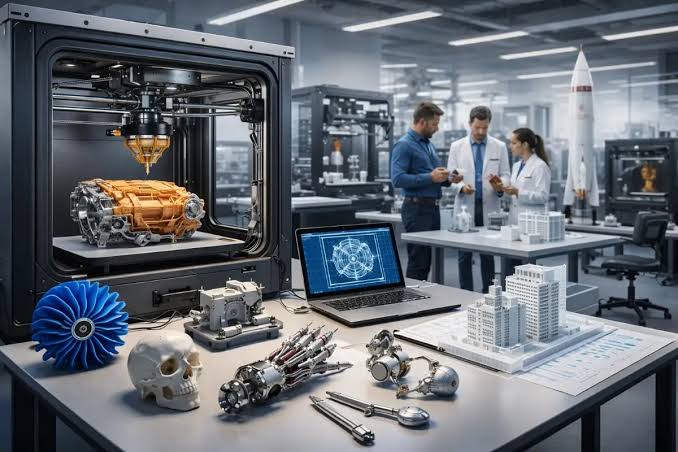
Industrial 3D printing is changing how modern businesses develop products, produce components, and respond to new market demands. Unlike traditional manufacturing methods, additive manufacturing builds objects layer by layer from digital design data. This approach allows engineering teams to create complex shapes, reduce material waste, and move from concept to physical part more efficiently.
For manufacturers, product developers, and engineering companies, industrial 3D printing solutions can support faster innovation while improving flexibility across the production process.
Accelerate Product Development
Traditional prototyping may require specialist tooling, long lead times, and several rounds of manual preparation. Industrial 3D printing gives businesses a faster way to turn digital models into physical prototypes.
Engineers can examine form, fit, and function before committing to full production. Design changes can also be made quickly, allowing teams to test ideas without rebuilding expensive tools.
Improve Design Freedom
Additive manufacturing allows designers to create internal channels, lightweight structures, organic shapes, and consolidated components that may be difficult to produce through conventional machining.
This greater design freedom can help businesses improve product performance, reduce assembly requirements, and develop more efficient components. However, successful results still depend on suitable materials, accurate design preparation, and the correct printing technology.
Support Flexible Manufacturing
Industrial 3D printing is not limited to concept models. Modern systems can produce functional prototypes, manufacturing aids, customized parts, and selected end-use components.
Businesses can manufacture low-volume items without investing in dedicated tooling. This makes additive manufacturing valuable for specialized production, replacement parts, and applications where design requirements change frequently.
Reduce Material and Inventory Waste
Because material is added only where it is needed, 3D printing can reduce waste compared with processes that remove material from a larger block. Digital storage may also reduce the need to keep large quantities of rarely used parts in inventory.
Companies can maintain approved design files and produce selected components when required, helping them use storage space and resources more effectively.
Connect 3D Printing with Digital Engineering
3Dexperience SolidWorks can support connected product development by combining design tools with cloud-based collaboration, task management, and secure access to engineering information. Teams can review designs, communicate changes, and prepare models for additive manufacturing within a more organized digital workflow.
SolidWorks PDM helps businesses manage design files, revisions, approvals, and product information. Controlled data management is important for 3D printing because production teams must work from the correct model, material specification, and approved design version.
Choose the Right Industrial 3D Printing Solution
Selecting a 3D printing system should begin with a clear review of the intended applications. Businesses need to consider part size, material requirements, accuracy, surface quality, production volume, operating costs, and post-processing needs.
SEACAD Technologies provides engineering software, additive manufacturing solutions, training, implementation, and technical support for modern businesses. With the right technology and professional guidance, companies can shorten development cycles, improve design flexibility, reduce unnecessary waste, and build a more responsive manufacturing operation.