
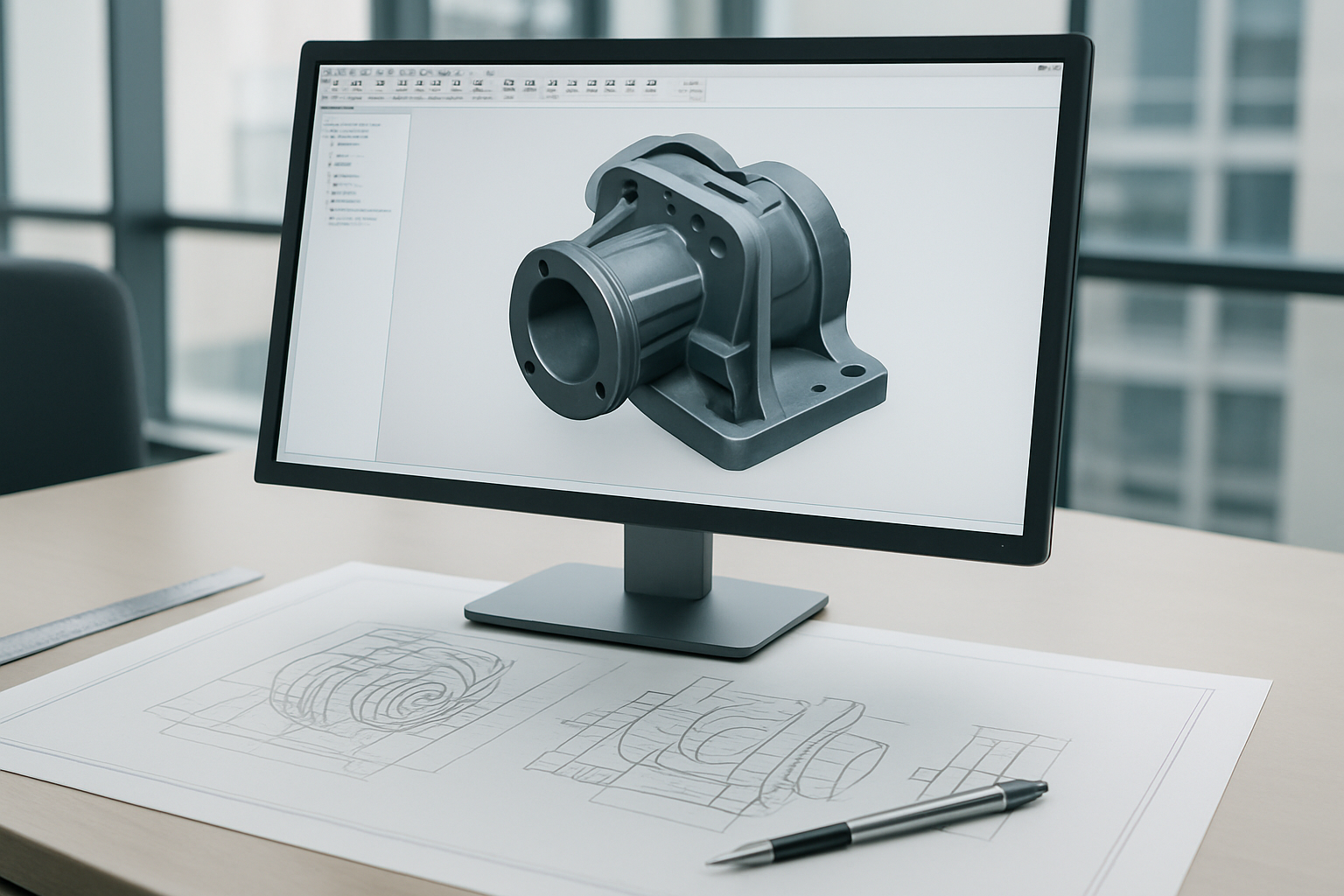
Why SOLIDWORKS Continues to Support Modern Engineering
Engineering teams today require efficient design tools that improve productivity, simplify collaboration, and support faster product development. As manufacturing processes become more advanced, businesses need software solutions that can adapt to changing project demands while maintaining precision and quality.
SOLIDWORKS remains one of the most trusted 3D CAD platforms because it offers a complete engineering environment designed to streamline workflows and improve operational efficiency.
1. Faster Product Design and Development
SOLIDWORKS allows engineers to create detailed 3D models quickly and accurately. Design changes can be applied efficiently without rebuilding entire assemblies, helping teams reduce development time and improve project flexibility.
This streamlined process enables businesses to move from concept to production more efficiently.
2. Improved Design Accuracy
Accurate engineering models are essential for reducing manufacturing errors and avoiding costly revisions. SOLIDWORKS provides advanced modeling tools that help engineers create highly precise designs with greater consistency throughout the workflow.
By improving design accuracy early in development, businesses can minimize production risks and improve product quality.
3. Better Team Collaboration
Modern engineering projects often involve multiple departments working together simultaneously. SOLIDWORKS supports collaboration by allowing teams to share updated design information and maintain alignment throughout each project stage.
Improved communication between engineering, production, and management teams helps reduce delays and supports smoother project execution.
4. Integrated Simulation and Testing
SOLIDWORKS includes simulation capabilities that allow engineers to analyze product performance before physical manufacturing begins. Teams can identify weaknesses, evaluate stress points, and optimize designs digitally.
This helps reduce material waste, improve reliability, and shorten development cycles.
5. Scalable for Different Industries
One of the key strengths of SOLIDWORKS is its flexibility across different engineering sectors. From manufacturing and industrial equipment to electronics and product design, the platform supports a wide range of applications.
Businesses exploring SolidWorks free trial options often discover how adaptable the software is for both small engineering teams and larger enterprise operations.
6. Enhanced Electrical System Design
For projects involving electrical components and wiring systems, SolidWorks electrical helps engineers integrate electrical schematics with mechanical designs more efficiently.
This integrated workflow improves coordination between electrical and mechanical teams while helping reduce design conflicts during production.
7. Strong Data and Workflow Management
Engineering projects generate large volumes of design files, revisions, and documentation. SOLIDWORKS supports organized file management and version control, helping teams maintain accurate project records and reduce the risk of outdated data.
Efficient workflow management improves productivity and supports better long-term project organization.
Supporting Long-Term Engineering Success
Implementing SOLIDWORKS in an engineering workflow provides more than just advanced design tools. It supports collaboration, accelerates product development, improves design accuracy, and strengthens overall operational efficiency.
As industries continue to embrace digital engineering and smart manufacturing, SOLIDWORKS remains a valuable solution for businesses seeking reliable and scalable engineering software.